 DISPLAY CALENDAR
Special Projects
SGP-7
SGP in the PHILIPPINES
About SGP-7
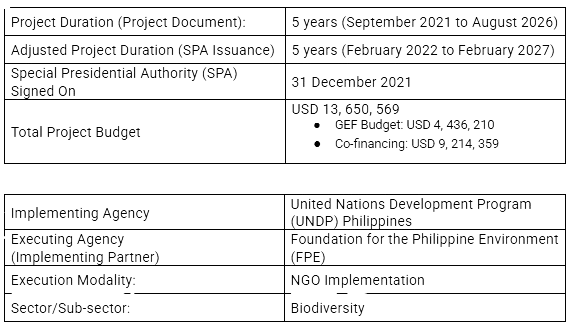
Project Snapshot
Global Environment Facility Small Grants Programme in the Philippines (GEF SGP-7) strengthens socio-ecological and economic resilience through community-based initiatives that generate global environmental benefits and promote sustainable development. Implemented across four priority landscapes and seascapes—the Catubig Watershed in Samar Island, Aurora Province in the Sierra Madre, the Siargao Island Protected Landscape and Seascape (SIPLAS), and the Calamian Group of Islands (CGI) in Northern Palawan—the programme empowers communities to implement scalable and innovative solutions through grant financing, technical assistance, and capacity-building support.
Supported by the United Nations Development Programme (UNDP) and funded by the Global Environment Facility (GEF), SGP-7 is implemented in partnership with the Department of Environment and Natural Resources (DENR) and the Foundation for the Philippine Environment (FPE), ensuring strong collaboration between civil society organizations, government agencies, and development partners.
Communities in priority sites face mounting pressures from habitat destruction, biodiversity loss, and climate change, including extreme weather events. These challenges are compounded by poverty, limited awareness and resources for conservation, fragmented ecosystem management, weak governance coordination, and expanding commercial and tourism activities. As a result, fragile ecosystems—and the livelihoods and cultural integrity of indigenous, coastal, and upland communities who depend on them—are increasingly at risk.
In response, SGP-7 builds the capacities of local communities, civil society organizations, and institutions to conserve biodiversity, restore ecosystems, strengthen climate resilience, and promote sustainable livelihoods. Through community-driven initiatives and multi-stakeholder partnerships, the programme pilots innovative, locally appropriate solutions designed for sustainability and replication.
SGP-7 contributes directly to national priorities, including the Philippine Development Plan and the Philippine Biodiversity Strategy and Action Plan (PBSAP) 2015–2028, particularly in enhancing ecosystem services and improving human well-being through inclusive and participatory biodiversity governance. It also supports the National Climate Change Framework Strategy and the National Climate Change Action Plan by strengthening ecosystem integrity, enhancing carbon sequestration through restoration, and increasing the adaptive capacity of vulnerable communities.
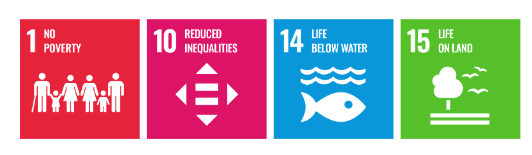
At the global level, SGP-7 advances the achievement of the United Nations Sustainable Development Goals, including SDG 1 (No Poverty), SDG 10 (Reduced Inequalities), SDG 13 (Climate Action), SDG 14 (Life Below Water), and SDG 15 (Life on Land), by empowering communities to protect biodiversity while building sustainable, inclusive, and climate-resilient futures.
Barriers Addressed by the Project
By providing grants to CSOs in the target landscapes and seascapes, the SGP-7 intends to address the following barriers:
-
Barrier 1
Community organizations in the target landscapes and seascapes lack a larger and more long-term vision and strategy for biodiversity protection, ecosystem and resource management, and weak adaptive management capacities exemplified by the proliferation of unsustainable livelihood practices and the lack of know-how in pursuing alternative sustainable livelihoods, which contribute to conservation.
-
Barrier 2
Community organizations in the target landscapes and seascapes have insufficient capacities and voices to efficiently and effectively advocate policy changes at the local and national levels to support biodiversity conservation and landscape and seascape resilience. This is particularly relevant for women, as most of the community organizations are headed by men.
-
Barrier 3
Community organizations lack sufficient financial resources and technical knowledge to link with the private sector to lower the risks associated with innovating land and resource management practices to conserve biodiversity, and sustaining or scaling up successful experiences.
-
Barrier 4
Community groups tend to be disparate, at geographical distances, or operating in silos without a coherent approach to biodiversity conservation and landscape resilience.
-
Barrier 5
Skepticism towards NGOs resulting in declining support from the government and the donor community for institutional strengthening.
-
Barrier 6
Weak environmental governance, institutional capacity, and inter- governmental and multi-stakeholder collaborations
 Read Policy Briefs
 View Our Partners
 Access Grants MIS
 Login to Webmail